

From Engineering to Public Service: A Conversation with Victor Udoewa
From Engineering to Public Service: A Conversation with Victor Udoewa
When you ask Victor Udoewa how he describes his work, his answer is simple: he designs better experiences for the public. As a Principal Service Designer and Chief Experience Officer, he focuses on improving both how people interact with government services and how federal employees deliver them. “We design on both sides,” he explains, “to improve the public experience and the employee experience.”
An Unlikely Path to Civic Design
Udoewa’s career began in mechanical and aerospace engineering, where he specialized in computational fluid dynamics — writing computer programs to model airflow and physical laws for aircraft, spacecraft, and automobiles. That intersection of computer science, applied math, and engineering offered flexibility. “I could apply it anywhere — meteorology, medicine, finance, even paleontology,” he says. “I once modeled blood flow for doctors and analyzed fossils to determine dinosaur diets.”
But a postdoctoral fellowship in South Africa changed his course. “I realized my research didn’t really impact anyone’s life. If I hadn’t done the work, nothing would have been worse off,” he recalls. “I wanted to do something where, if I didn’t show up, people would be worse off because the work mattered.”
That realization led him to the AAAS Science & Technology Policy Fellowship, where he began at the Department of Homeland Security and later joined the U.S. Agency for International Development (USAID). “For the first time, I could use my science and technology background to inform high-level, life-improving decisions,” he says. “I wasn’t making the decisions, but I was close to power and able to influence the decision-makers.”
When the fellowship ended, Udoewa was recruited by Google to help design educational products and services for people in low- and middle-income countries. The work was exciting, but not always easy. “Sometimes the best educational solution didn’t align with profit motives,” he says. “That tension taught me a lot about values and purpose.”
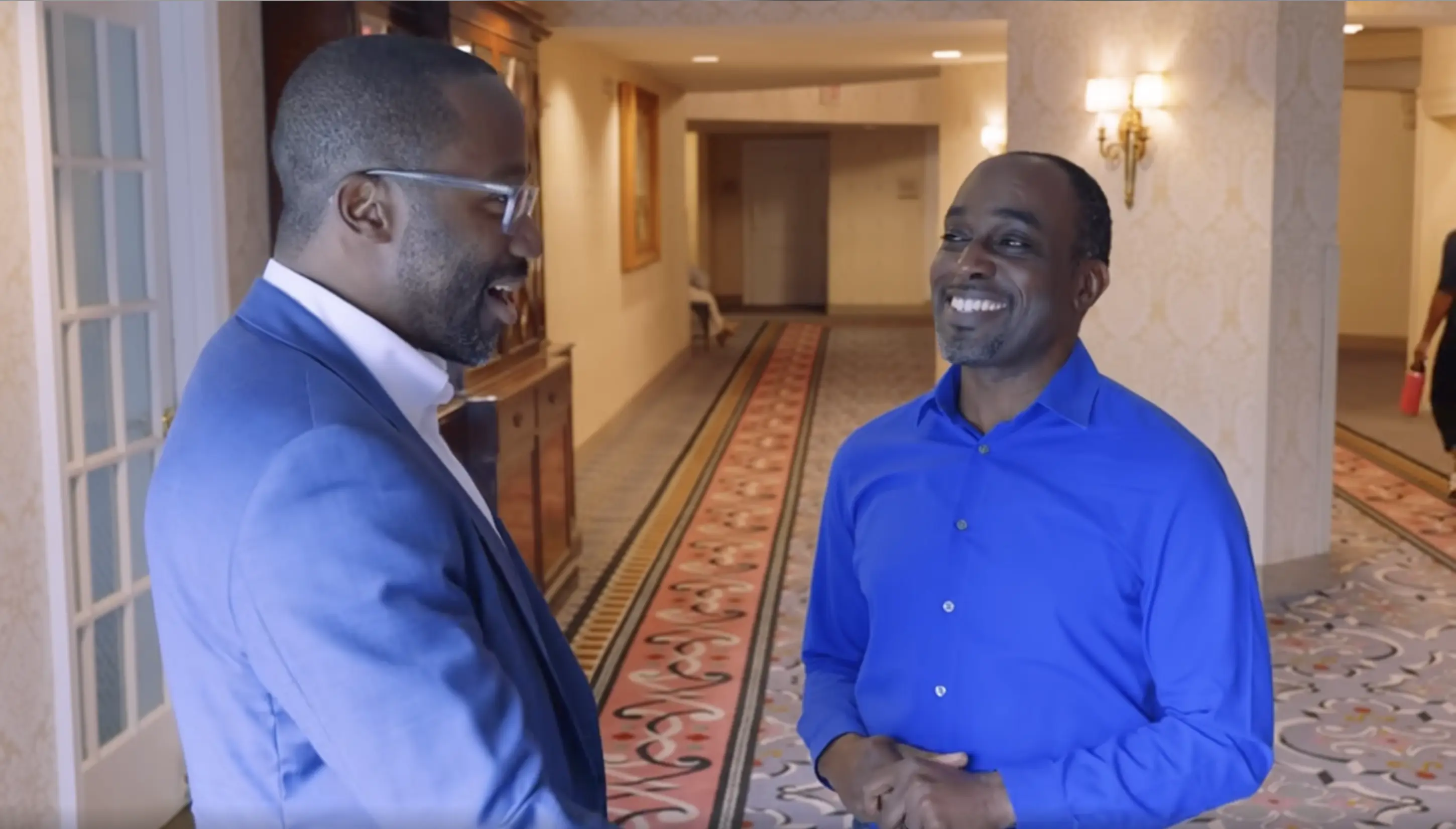
Catching the “Civic Tech Bug”
In 2015, Udoewa returned to the United States to join the newly formed 18F, one of two government consultancies created after the healthcare.gov crash to help federal agencies improve their digital services. “We worked with Education, Treasury, NIH, and more — building better tools for FAFSA, for instance,” he says. “That’s where I caught the civic tech bug.”
After two years at 18F, he transitioned inside government, first to NASA and then to the CDC. “I wanted to be part of the decision-making, not just a consultant,” he explains. At NASA, he experienced what he calls the best workplace culture of his career: “They’d been voted the best federal agency to work for twelve years in a row - and best [for] nine. Who hates NASA?”
Each step in his journey - from engineering labs to global development, from Google to government - brought him closer to the kind of work that connects technical innovation with human well-being.
Navigating Identity in Tech and Government
Throughout his career, Udoewa has often been one of few Black or Indigenous people in the room. “In tech, especially software and information systems, it’s mostly white men,” he notes. “On the design and research side, you see more women, but still very few people of color. Sometimes you’re the only one advocating for something based on your experience.”
His heritage as an Ibibio person from Nigeria shapes how he approaches design and knowledge. “In my culture, knowledge is not an object - it’s a relationship,” he explains. “Western traditions often treat knowledge as something outside of us that we study. But for us, relationality is at the root of knowing. You have to be in right relationship - with people, with the community - for knowledge to emerge.”
That worldview informs how he leads participatory design projects. “When we worked on mental health and housing in Detroit, we couldn’t do anything until we built trust,” he says. “You can’t come in as the government — often seen as the enemy — and expect people to open up. Relationships come first.”

Working Toward Repair and Reciprocity
Udoewa is candid about the tensions of working within institutions that have historically harmed marginalized communities. “It’s hard,” he admits. “You see decisions that will hurt people, and you try to move them in the right direction, but you don’t always have the power.” His approach is rooted in what he calls redemptive design: “Turning the site of harm into a site of repair, restoration, and reconciliation.”
This ethic of reciprocity traces back to his upbringing in a tight-knit Nigerian immigrant community in the United States. “We had national and local associations that raised money for projects back home,” he recalls. “Even as a kid, I saw people using their resources to help their community in ways that mattered to them. It was just what we did.”
A Broader Vision of Public Service
That foundation of service shaped his later realization that government could be a site of collective good. “I never thought of public service as a career option,” he admits. “In grad school, no one told us about alternatives beyond academia. But when you think about it, public service is just another way of helping your people. I wish I’d known that sooner.”
For Udoewa, public service is more than a job description - it’s a philosophy of belonging and responsibility. “When you’ve been colonized, it’s easy to start chasing other people’s definitions of success - education, money, prestige,” he says. “But for me, success is tied to service. It’s about using what you’ve been blessed with to bless others.”
That vision continues to guide his work at Bloomworks and beyond. “The government has to work for everyone,” he says. “And to do that, we need to center relationships, equity, and care in how we design systems.”
Udoewa’s journey - from engineering labs to global development, from tech to government - embodies the idea that technical expertise and empathy aren’t opposites but partners. “The work matters because people matter,” he says. “If what we design doesn’t make someone’s life better, then what are we doing?”
Thank you to Victor Udoewa for sharing his journey with the Sloan Scholar community. Connect with Victor on LinkedIn!