Scholar Spotlight: Dr. Karin Block-Cora
“If you are the only one in your department who is Latina in a Hispanic Serving Institution, guess where all the students are going to go? If there's only one young woman on your faculty, guess where all the women are going to go? My office was like Grand Central Station.”
Dr. Karin Block-Cora, professor of earth and atmospheric science at the City College of New York and member of the SSMN Advisory Board, approaches academic mentoring as both a cheerleader and a pragmatist.
“There's too much ego sometimes in mentoring,” Dr. Block-Cora said. “I think we often feel like, ‘Oh man, I worked so hard to get this student to be super spectacular and awesome, and they never even became a professor.’ And the thing is, it's not about us.”
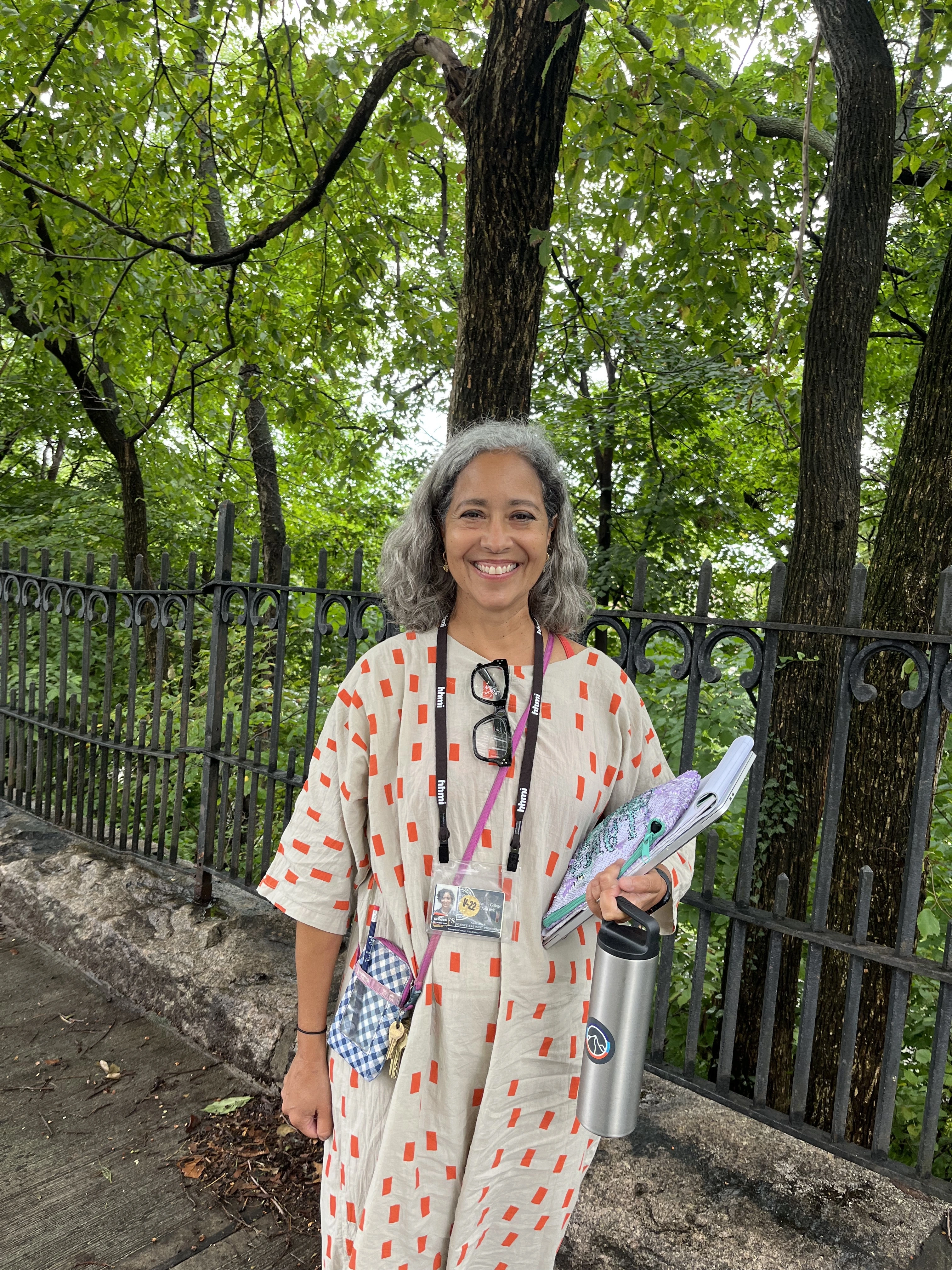
magnetic on campus.
In October, Dr. Block-Cora was one of three faculty to receive the City University of New York’s 2023 Mentoring Award. Several current and former students wrote in to nominate her and share what her leadership has meant to them; one wrote that Dr. Block-Cora helped “demystify who is a scientist and discover my own potential as a scientist.”
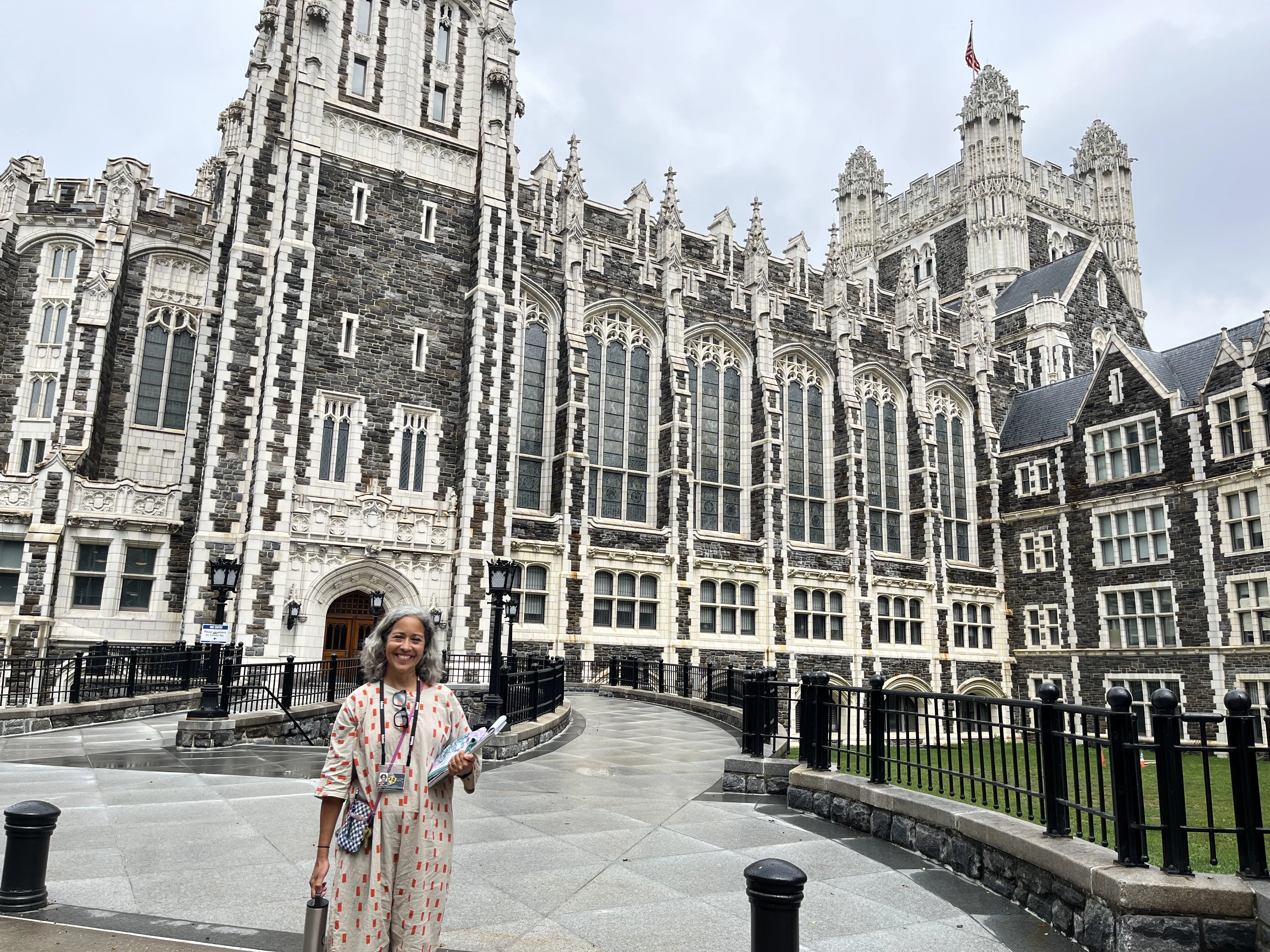
On campus, Dr. Block-Cora is energetic and magnetic—dropping in on a group lunch in the student café, enthusiastically recruiting a grad student who wandered into her office, passing a colleague and making plans to invite a speaker from the U.S. Geological Survey to meet with students.
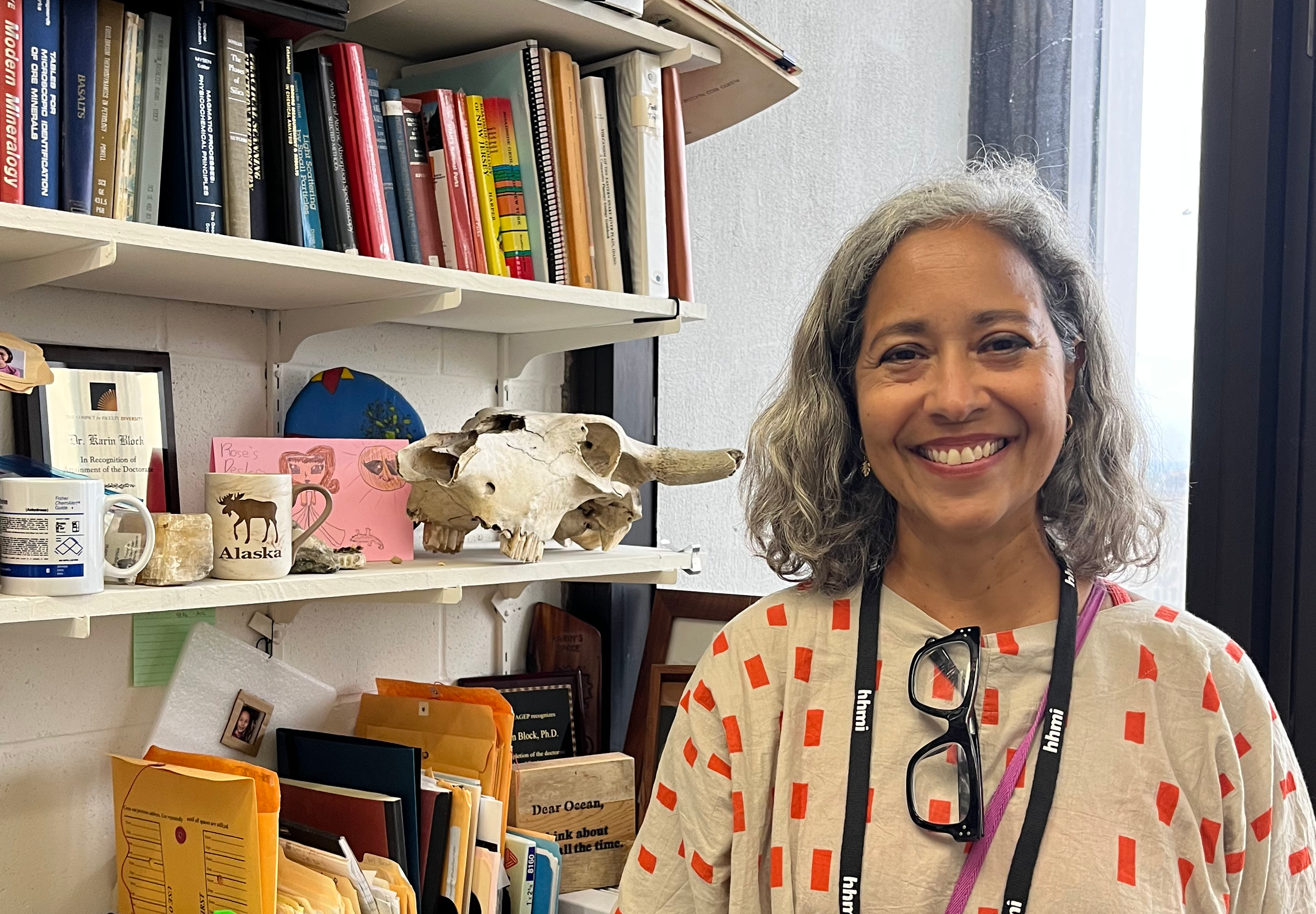
When I met with Dr. Block-Cora in her office, she talked to me about her students and her goals as a mentor. She remembered an impressive former student who went on to a prestigious graduate program in physics. A couple years in, the student realized she didn’t want an academic career.
“She called me saying, ‘I feel so bad. I feel like I've disappointed you,’” Block-Cora recounted. “And I said, ‘You haven't disappointed me. I want you to be happy and fulfilled.’”
That faith in her students to know what they need—and the steady encouragement she gives them to follow what they love—reflects Dr. Block-Cora’s own growth process as a scientist, finding balance among her many passions and values over the years.
Dr. Block-Cora completed her doctoral work in earth and environmental science as a Sloan Scholar at the City University of New York in 2006. She studied igneous petrology, the combined physics and chemistry of how igneous rocks form. Using data on mineral composition and the relationships between different ancient minerals, both underground and at the Earth’s surface, she drew conclusions about the physical and chemical processes that made those rocks what they are.
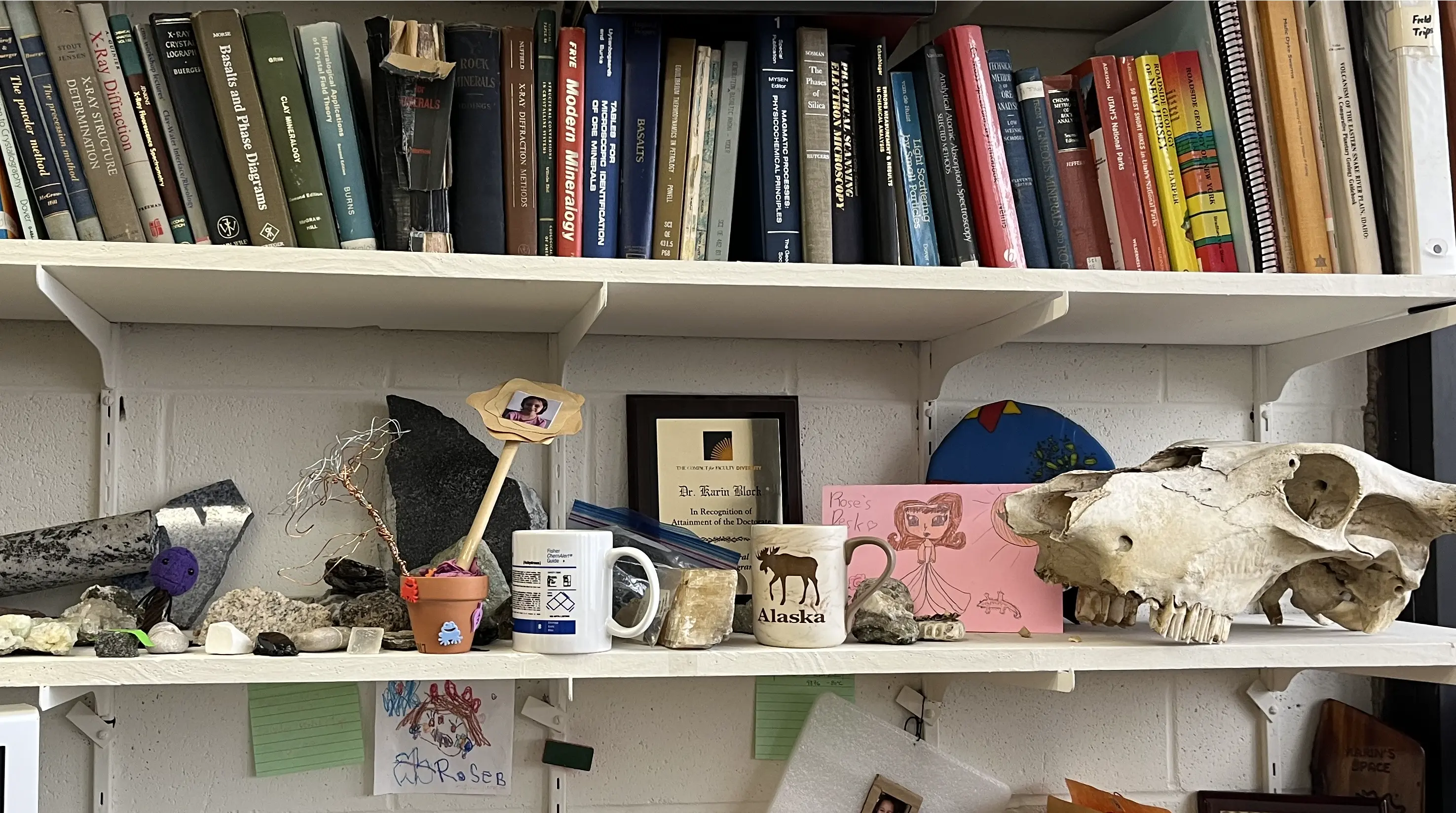
skull of a large horned ruminant, multiple homemade
cards, a framed award, and about a dozen rock samples.
After earning her PhD, Dr. Block-Cora joined a geoinformatics group at Lamont-Doherty Earth Observatory, an institute of Columbia University’s Climate School located on the Hudson River in Palisades, New York.
There, she and her colleagues developed resources for earth-science researchers, meticulously compiling data from peer-reviewed literature into large, research-grade databases. “I was in a campus of all geoscientists—everything from seismology to oceanography,” she said. “So I got to learn a lot and be immersed in that environment.”
She realized that gaining professional experience at Columbia would be valuable. “I knew that I would be able to expand my network and sort of learn how things are done in a different environment from where I did my PhD,” she said. “I met a lot of amazing people. I got to learn about the soft money world,” in which most staff positions were directly funded by grants rather than backed by the institution itself.
Dr. Block-Cora considers herself “very, very lucky” that, when she was ready to seek out faculty positions, the City College of New York—a division of her alma mater and a Hispanic Serving Institution—was amid a hiring campaign to recruit Black and Puerto Rican faculty.
Block-Cora was in the minority as a Latina faculty member at CCNY, in spite of the hiring effort. Right away, she was in high demand.
“If you are the only one in your department who is Latina in a Hispanic Serving Institution, guess where all the students are going to go? If there's only one young woman on your faculty, guess where all the women are going to go?” she said. “My office was like Grand Central Station.”
That high demand is what she calls the “Brown tax.” For Dr. Block-Cora, learning to manage the Brown tax meant developing a mentoring approach through which she could make a meaningful impact without being stretched too thin. Working with CCNY’s large and diverse population of Black and Brown students is her favorite part of the job—it’s “what I love about being at this institution, because that is my population,” she said. But where she used to be interested in recruiting as many students as possible, she now focuses more intently on what she can offer to individual students.
In particular, she believes that what younger scientists deserve most from their mentors is transparent and candid information about their options, and what they’ll need to do to get from A to B. This is especially true for aspiring scientists from minoritized backgrounds.
“It’s about not just [working against] gatekeeping in the traditional sense of people wanting to maintain the status quo … but more in terms of making sure that students have all the information,” she said. At the beginning of her own career, even with two scientist parents, Block-Cora said she still felt underequipped navigating the world of higher education and research. The expectations and benchmarks had changed—and continue to change—from generation to generation. But thoughtful mentoring can mitigate those effects.
Today, Dr. Block-Cora asks herself and her colleagues: “What exactly are we presenting to students to make sure that they are prepared? And I don’t mean academically, I mean psychologically and professionally, and career-wise. … For students who dont know what their options are, I try to demystify that.”
For example, she finds it important to talk to students about the resource needs associated with different scientific fields and specialties. “If you’re a biology bench scientist, the fact is, you need money—you need startup, you need grants, you need staff.” That means you’ll need to seek out a position at the kind of institution that will make those resources available, “and then you have to prepare yourself accordingly, so that you land in that position.”
What if, after all that advance preparation, you get to Step Two or Step Three and find that it’s not what you thought it would be? “You can change your mind at any time. You don’t owe anyone anything,” Dr. Block-Cora said.
She helps students build flexibility into their plans—suggesting a course adjustment that could qualify them for two or three adjacent job paths after graduation, for example, so they’re less likely to be stuck if they change their minds later.
The other piece of managing the “Brown tax” was learning how to be selective with service opportunities, by pinpointing what she values most in a service experience. Block-Cora’s advice: “Only do service that you learn from, where you connect and network with people, or that benefits your career at this stage.”
Being on the Advisory Board for the Sloan Scholars Mentoring Network meets those criteria.
“This particular commitment is something that I call my fun service work,” she said, “because I get to potentially directly help people—and not just help people, but help my community, who helped me so much.”
Block-Cora gets a lot out of her relationships with the other Advisory Board members. “I love those folks. I have learned so much,” she said. “They have done so much to inspire me and to serve as role models… All of them are just fantastic and so accomplished and so thoughtful that I feel a tremendous privilege in considering them my friends and colleagues.”
During our conversation, Block-Cora remembered a year in grad school when her funding dried up and she needed more time to finish her dissertation. “I had squirreled away my Sloan money,” she said. “That's what kept me afloat that fifth year when I didn't have money.”
On the SSMN Advisory Board, she gets to help shape programming that, she hopes, makes the same kind of difference for early-career scientists today.
“Nothing is more satisfying to me than when we are able to give a grant to someone for whom, you know, that little bit of money is going to put them over the top,” she said. “If that's going to make the difference in them getting advancement, or the next job, or promoted, or job permanence—to me, that's the goal. What could be better?”