

Scholar Spotlight: Dr. Candice Guy-Gaytán
Dr. Candice Guy-Gaytán (Delaware Tribe of Indians) brings nearly two decades of experience in education to her work as a curriculum developer and research scientist with BSCS Science Learning, a non-profit established in 1959 with a longstanding focus on science curriculum development for K-12 students. Candice’s research interests are in the design and implementation of culturally relevant curricula. Her work involves collaboration with teachers, students, curriculum writers, and researchers across the continent to develop science curricula implemented on a national scale.
In 2023, Candice joined the Advisory Board for the Sloan Scholars Mentoring Network (SSMN), where her expertise has been instrumental in expanding programming for graduates of the Sloan Indigenous Graduate Partnership (SIGP) program.
The Path from Science to Science Education
Candice is a daughter, granddaughter, sister, and partner. She grew up in Francisco, Indiana, and began her higher education journey just four hours from her home at Purdue University. At Purdue, Candice earned her bachelor’s degree in cell molecular biology, preceding her distinction as the University’s inaugural graduate of the SIGP program where she completed her M.S. in Population Ecology and Evolution.
Candice’s path into science education started during her Master's program, when she worked with a professor on manta shrimp research and on educational outreach in schools. This foray into teaching was the start of a "long and winding road…but one I don’t regret.” After her program, Candice continued to work at Purdue as an outreach coordinator before moving to San Francisco to teach elementary school.
Candice taught for some time, and felt the pull to return to graduate school for her doctoral studies. She earned her PhD in Science Education at the University of California, Davis where she studied what scientific practice could look like in the classroom. She adds, “I was really interested in the ways that we could get students involved in science in a way that gave them a sense of what science is, or could look like.”
Candice elaborates on her doctoral research, highlighting her involvement in an NSF-funded project where she helped develop an “entire curriculum to get students to engage and understand the model of natural selection well. Once (that) was developed, I studied how teachers implemented the curriculum into their classrooms. I focused on what kinds of things teachers learned about scientific practice, what kinds of things did teachers change or modify about the curriculum and why, and finally: what could we, as curriculum designers, take away from this to better design curriculum that works for both teachers and students.”
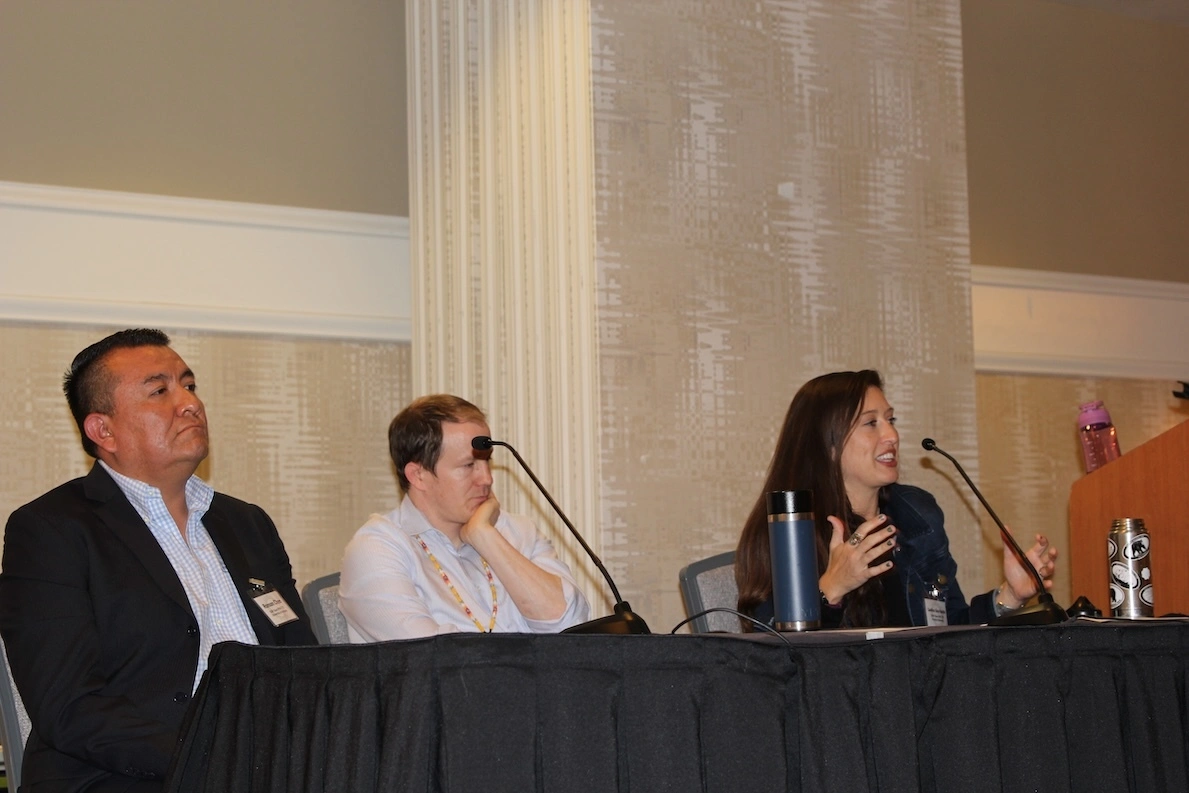
at the inaugural 2024 SIGP Symposium.
Eventually, she would find her way back to the kind of curriculum development and analysis she loved doing during her PhD. But she didn’t get there immediately. Initially, she stayed in academia, landing a tenure-track professorship at a university. “As a professor, I loved advising, I loved working with my students there, but I really missed curriculum development. I was finding it challenging to continue to do the things I love and to support my own community in the ways that I wanted to.”
She reflected and sought advice from elders and family, and finally made the decision to leave her faculty position for the role she now holds at BSCS Science Learning.
“From that, one thing I’ve realized is that it's never too late to do the things that you want to do, and to continue to do the work that matters and is important to you. I think that's probably the biggest thing I've learned along the way in my winding career path.”
The Roles of a Research Scientist
Much of Candice’s work and focus at BSCS has been on “defining science in expansive ways, and bringing on members from the communities that we serve to make sure that they are giving voice to...and are seeing themselves and their communities in the science curriculum materials that we are creating.”
She tackles this work using a variety of skills. “I am a curriculum developer, I am a professional learning provider, and I am also doing research. It's a very diverse position, and the workload for each of those things varies from week to week, which is part of what I love about my job. I am getting to do all of the things that I love and doing them, hopefully, in meaningful and impactful ways.”
Joining the SSMN Advisory Board
In 2023, Candice joined the SSMN Advisory Board, a decision driven by her gratitude for the Sloan program’s impact on her career, and a desire to extend its reach to Indigenous students. As the SSMN expands and grows, Candice shares, “I’m excited that the program is getting more Native voices involved, and ensuring that Indigenous folks have an important voice on the board.” Finally, “I’m excited to meet new people, and to hear from the other board members who have been (doing amazing things) in their respective fields for years, about ways that we can better support historically excluded minoritized students.”
Q: What advice do you have for Sloan peers who want to pursue a career in science education and research?
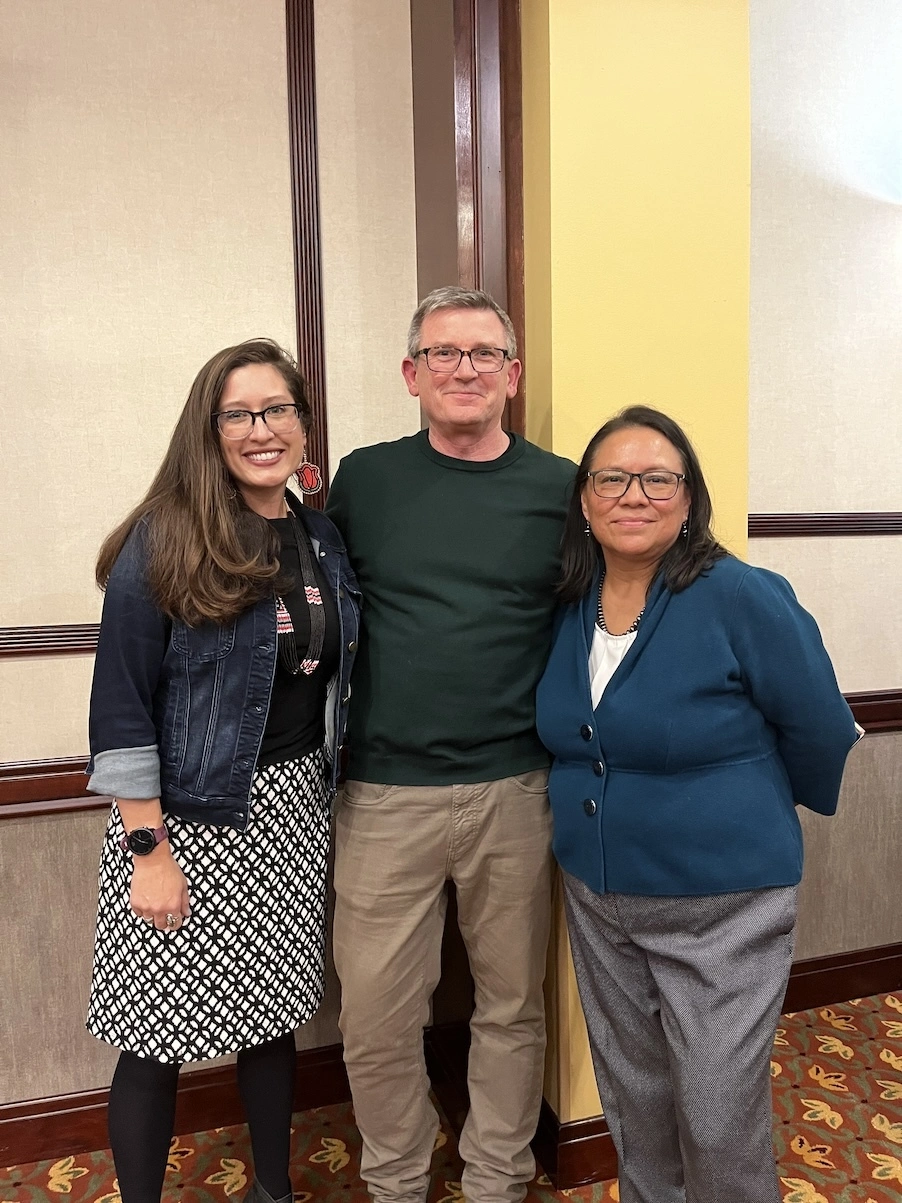
Kevin Gibson and Felica Ahasteen-Bryant,
at the 2023 AISES Sloan Reception.
“If you're interested in the field and unsure of what to do, reach out to folks! One thing I was really encouraged to do by a mentor I met through SACNAS was to contact people whose work you like.” Candice adds, “When thinking about my graduate school experiences, I didn't know a lot of Native scholars in science education. But I think that that community is growing more and more. Once you find someone within that community, maintain that connection where possible, and try to build your network out from there.” Finally, “If you have the chance to attend conferences and events, find your mentors there and people that you might want to talk to.”
Q: Who have been important mentors or collaborators in your career?
“All of the Sloan faculty and staff, advisors and mentors, friends that I've met, and even cohorts that came after me! I still go to a lot of these folks for help and support. I'm also now partnering on projects with many folks that I've met through Sloan as well, which has been fabulous to start and to realize some of our dreams of working together. These are folks that I still enjoy connecting with and getting to see again. Without them, I definitely would not be where I am today.”
Q: What drives you?
“I think what really drove me to work in education was when I realized all that education could be. Once I realized what education could be, and once I really started to [envision] what kinds of classroom experiences I would have wanted as a young learner, where my own ideas, my backgrounds, and my perspectives were valued, I realized that the only way to make that happen was to get involved in doing it myself. It's been a journey, but one that I do not regret.”
Through her work and example, Candice hopes that “folks can see that it's never too late to make sure that you're finding work that aligns to your values, and engaging in work that allows you to do what you want to do. I also hope that through the work that I put out there, that folks see it's possible to create curriculum materials in ways that can have national impact, align to our values, and be useful, relevant and meaningful to our own individual communities.”