
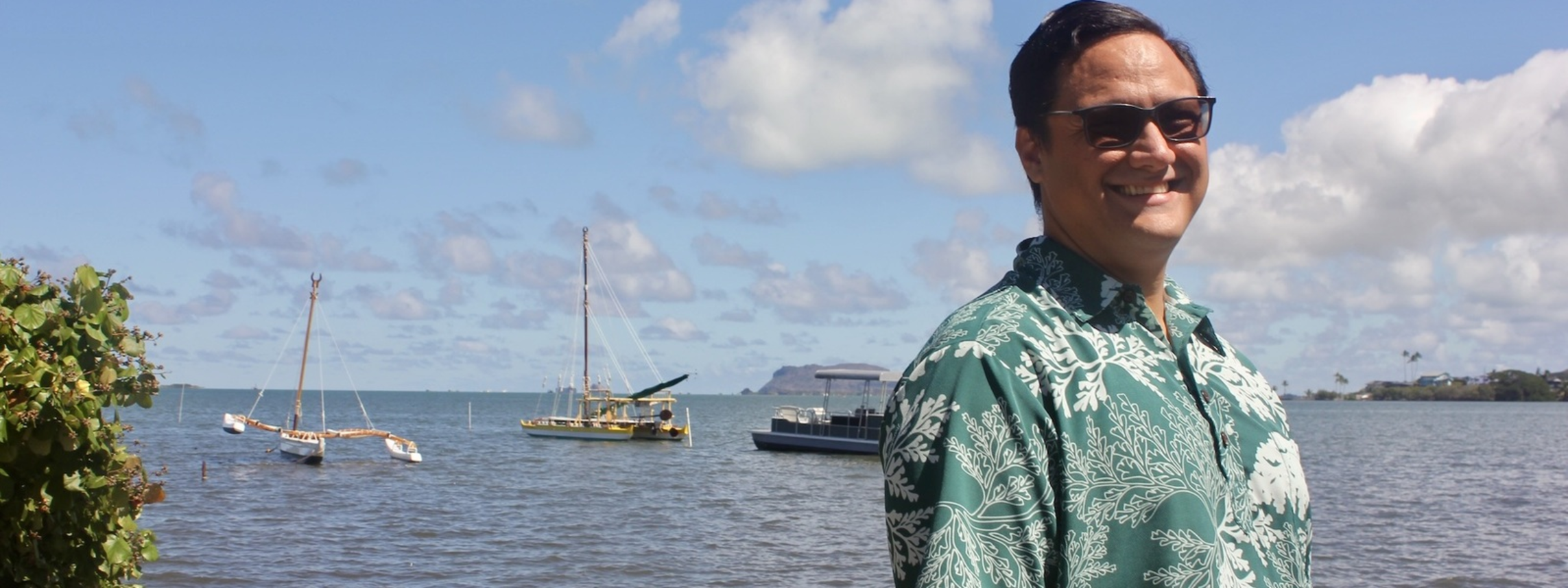
Scholar Spotlight: Dr. Kamuela Yong
Dr. Kamuela Yong (Kānaka Maoli/Native Hawaiian) is an associate professor of mathematics at the University of Hawai’i–West O’ahu, a co-founder of Indigenous Mathematicians, and a champion of mentoring and faculty diversity. He is the first Kānaka Maoli (Native Hawaiian) to earn a PhD in applied mathematics, and he's been awarded the 2019 Frances Davis Award, the 2020 University of Hawaiʻi Regents Medal for Excellence in Teaching, and the Empowering ʻŌiwi Leadership Award. In July 2024, Kamuela joined the advisory board for the Sloan Scholars Mentoring Network. Explaining her decision to invite Kamuela to join the advisory board, SSMN Program Director Dr. Veronica Zepeda stated that his ongoing involvement, perspectives, and expertise would greatly enhance SSMN programs and leadership.
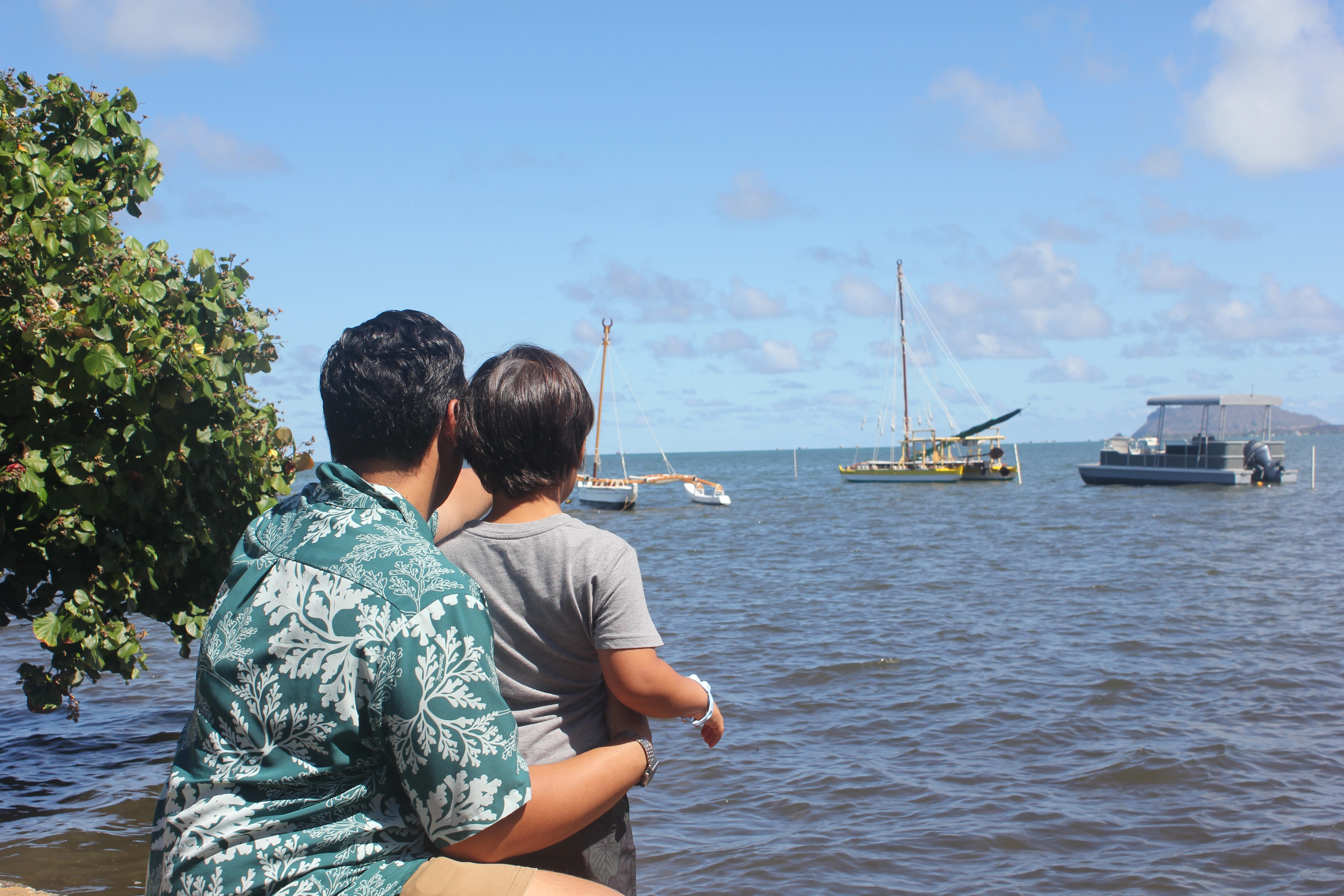
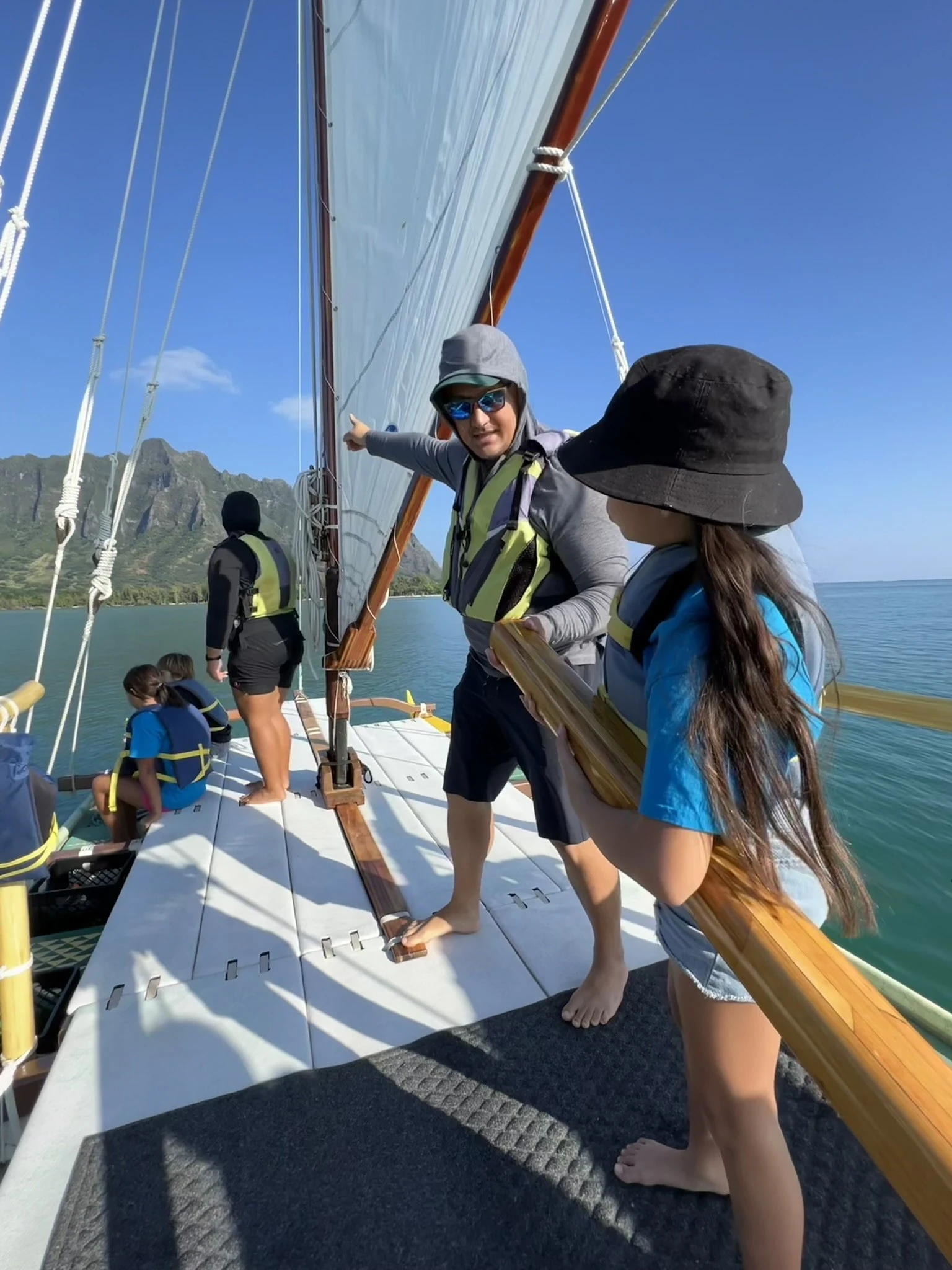 This interview took place in the moku (region) of Kaʻalaea, where the Kanehunamoku Voyaging Academy and waʻa (double hull sailing canoe) reside. While here, Kamuela shared his inspiring path through higher education and on to his current role. Today, as a professor of mathematics, he integrates Hawaiian and Pacific ancestral knowledge, including navigation and wayfinding, into his curriculum and daily life.
The Undergraduate Path from Engineer to Mathematician
Kamuela’s keen interest in mathematics began at a young age. Originally from Waimānalo, Hawaiʻi, Kamuela (who also goes by Wela for short) attended Loyola Marymount University in Los Angeles, where he earned his B.S. in both civil engineering and applied mathematics. Before stepping into his identity as a mathematician, Kamuela saw civil engineering as a practical career path where he could apply math to real-world problems. His undergraduate capstone course, in which he designed an applied math research model, marked a turning point. He explained, “The project was my first exposure to the scientific research process that helped me see that we can create math models to model anything — from climate change, to protecting endangered species, to disease transmission.”
The capstone experience inspired him to pursue a PhD. And although he initially applied to civil engineering programs, Kamuela’s mentors helped him begin to see himself as a mathematician who could apply math models across fields — as opposed to an engineer who did math models. At that point, Wela said, “The whole world opened up to me.” He recognized the limitless applications of math models to areas like civil engineering, ecology, and sustainability.
Graduate School: Changes and New Challenges
After graduating from Loyola, Kamuela left L.A. to pursue his M.S. and PhD as a Sloan Scholar at the University of Iowa.
The move to Iowa came with many changes, but Kamuela approached his time there with a sense of novelty — taking time experience a new city, school, friends, and even the changing seasons! The new program and new city also came with new challenges to overcome. He faced a steep learning curve in his first year, feeling confused in the classroom and hesitant to ask questions. He also grappled with self-doubt and struggled to find a sense of belonging. In those times, Wela leaned on his undergraduate mentor and supportive classmates, who validated his experience as one that many people go through.
Wela explained, “It was a game changer to realize that struggle is difficult, but I'm not the only one. I just need to surround myself with a core group of support to help me through it.”
Overcoming those early struggles, Wela became the first in his class to schedule his thesis exam, the first to get a job outside of his university, and the first ever Native Hawaiian to earn a doctorate in applied math. He also discovered his passion for creating math models in ecology.
From Postdoc to the Professoriate
Wela went on to complete a postdoc at Arizona State University, where he worked with summer REU and high school bridge programs to support students from traditionally underrepresented backgrounds to succeed and see opportunities in math. From there, Wela returned home to Hawaiʻi to teach at the University of Hawaiʻi at West Oʻahu. His homecoming was met with overwhelming excitement, and students were inspired to see someone like them at the front of the classroom.
After Wela returned to Hawai’i, many people asked if he practiced ethnomathematics, which is teaching math through a cultural lens. But it wasn't really something he had considered. "There really wasn’t a place for me to learn cultural math in Los Angeles or Iowa," he explained, adding, “I felt a sense of guilt [not knowing this], because there's a difference between being a Native Hawaiian who's a mathematician, and doing Native Hawaiian mathematics.” But returning home to work and teach equipped him with opportunities and resources that eventually led him to develop waʻa math.
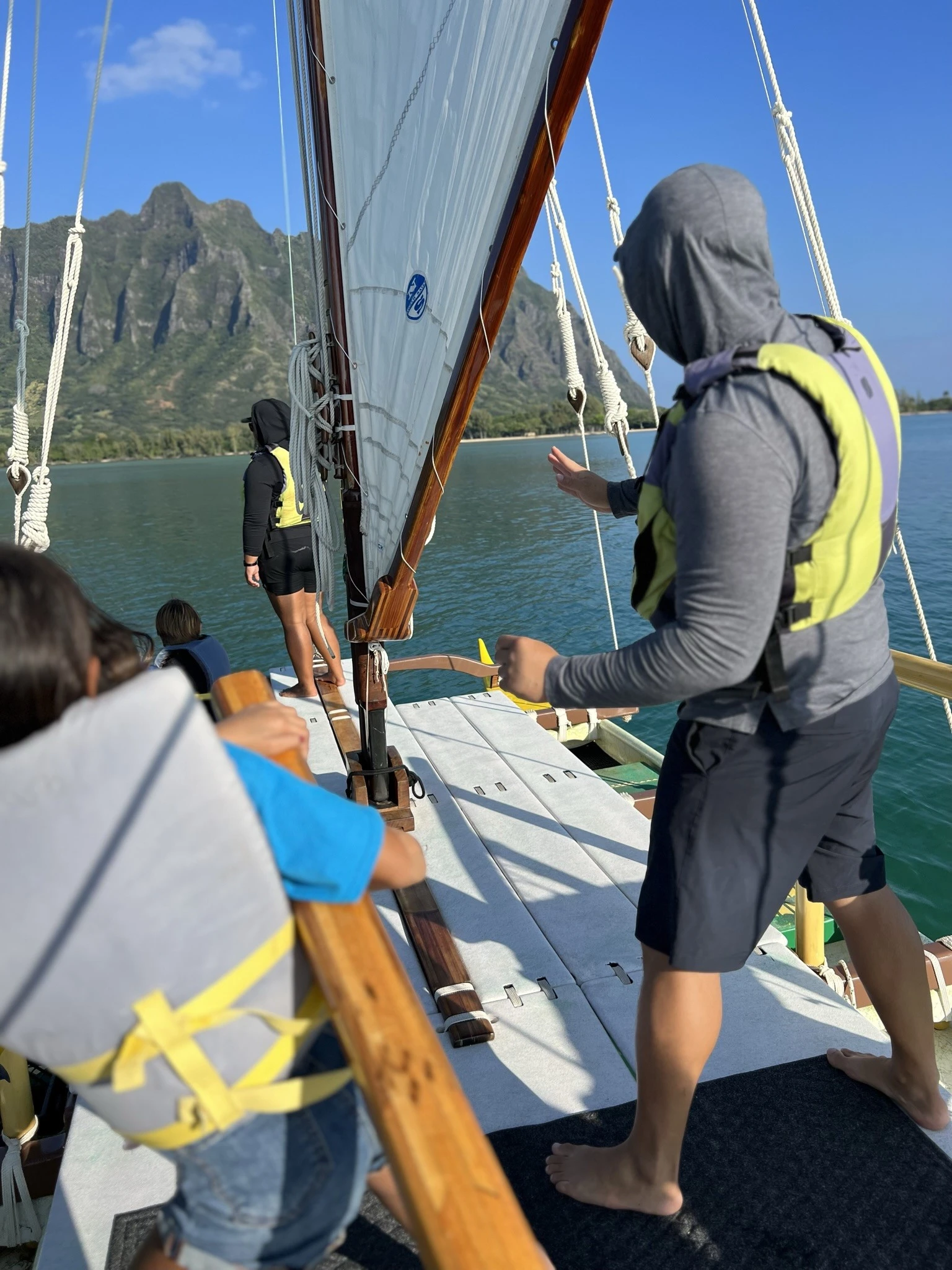 Waʻa Culture and Curriculum
In 2020, Kamuela attended a workshop where he learned frameworks for incorporating cultural components into STEM curricula. He said, “I started to develop what I call waʻa (canoe) math. I integrated my pre-calculus and trigonometry course with curriculum related to waʻa (canoe) and navigation, which led me to write a textbook: Trigonometry Through Wayfinding and Navigation Across the Pacific.”
As his work expanded, Wela saw a need to deepen his understanding of and relationship to wa'a culture. "I had limited experience with waʻa and navigation. I was an outsider writing about this culture that I don't know," he explained. "So, to ensure that I'm doing this work in a way that is culturally appropriate and sensitive, I wanted to immerse myself and be a part of the waʻa culture, not just an outsider writing about it."
Alongside his work as a professor, Kamuela began volunteering with different voyaging groups on Oʻahu. This led him to pursue internships with Kanehunamoku Voyaging Academy, a Hawaiʻi-based nonprofit with a mission to "perpetuate the knowledge of Traditional Hawaiian Navigation and provide opportunities to Native Hawaiian students to advance in contemporary ocean based careers through academic, college, and career support." While at Kanehunamoku, Wela participated in two internships to learn the different skills needed to navigate and voyage on a waʻa (canoe). He added, “The more time I spend on the waʻa, the more connections I see to the classroom. So much so that Iʻm starting to share this curricula with K-12 teachers.”
Indigenous Mathematicians
In 2020, Wela and his peers began to see a critical mass of Native Hawaiians earning PhD in mathematics.
They decided to create a space for Indigenous mathematicians around the world to be in community with one another, to receive support, and to also educate the broader math community about Indigenous people in mathematics. They called this new community Indigenous Mathematicians.
Through grassroots efforts, Wela has been able to identify more than fifty Indigenous PhD-earning mathematicians across the Pacific, North America, and Australia — and an additional two dozen graduate students are on their way to earning doctorates in the field!
At the end of our interview, we asked Kamuela two closing questions.
Q: What advice do you have for Sloan peers who want to pursue the field of mathematics?
A: There's always help out there for you! I would never have been able to accomplish and gotten to where I am alone. There were many times where I felt like quitting, and I relied heavily on my mentors and trusted peers to where I felt safe to say “Iʻm so lost, I donʻt know whatʻs going on, I donʻt know if I belong here”. To have people there to talk me off the ledge, to help me get through, or to provide me with resources.
At every stage, there has always been people who've helped me. Even now, I still rely heavily on mentors and send them things for their insight and guidance. I know that I can rely on them. Some of them have been there for me for almost two decades. We canʻt do it alone. There are people out there, especially a wonderful network like the Sloan Scholars Mentoring Network, that want nothing more than for you to succeed.
Q: Who have been important mentors or collaborators in your career?
A: My family and my wife have always been supportive of me. I’ve also had great faculty mentors. Biggest mentors to note are Erika Tatiana Camacho [Sloan Scholar PhD in applied mathematics, Cornell University '03] who mentored me and encouraged me to get a PhD, and who I still rely on to this day. I also want acknowledge Dr. Rebecca Garcia, who is the first Pacific Islander in math that I met as a graduate student. Rebecca also continues to mentor me and encourage me. It's great that both of these amazing people are now my colleagues and friends!
Mahalo nui (thank you) to Kamuela and to the Kanehunamoku Voyaging Academy for allowing us to film and interview at their home site. Connect with Wela on LinkedIn!