
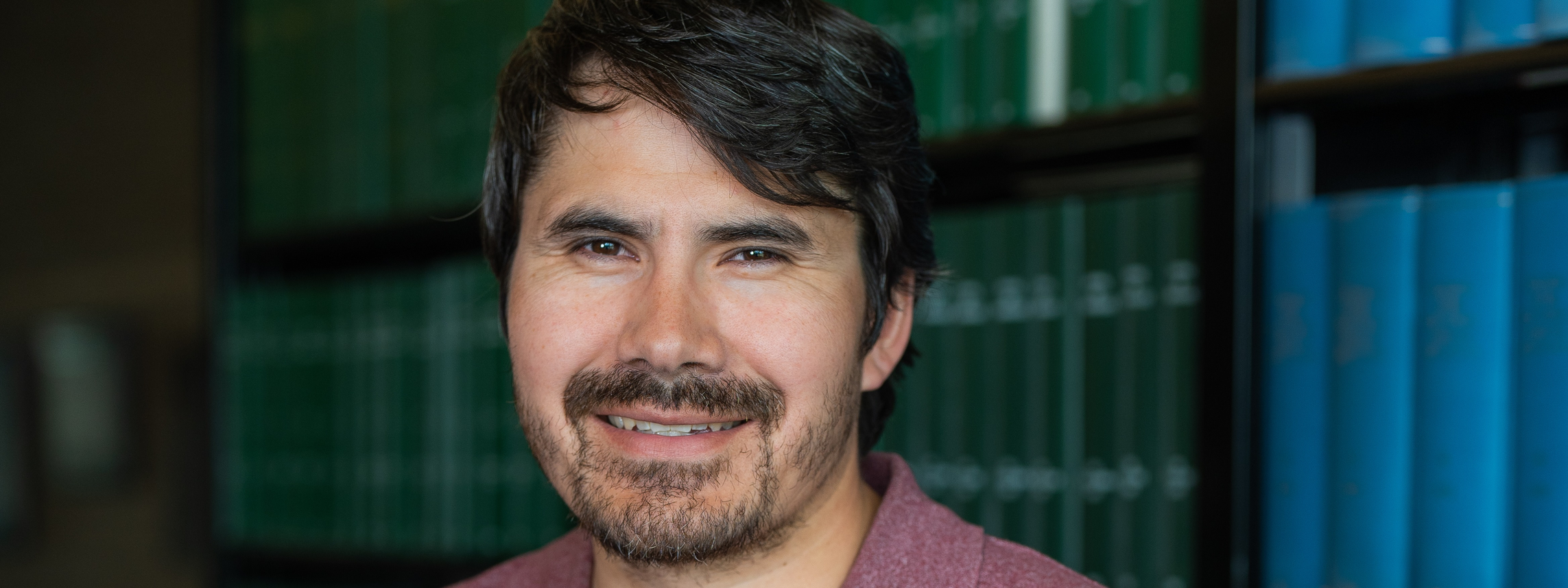
Grantee Spotlight: Dr. Moses Leaves
Dr. Moses Leavens is an assistant professor at the McLaughlin Research Institute in Great Falls, MT. He attended the University of Montana, where he earned his M.S. and PhD in biochemistry as a Sloan Indigenous Scholar.
In 2023, Dr. Leavens was awarded an SSMN Seed Grant to support his research with the superoxide dismutase 1 (SOD1) protein. Since receiving his grant, he has published research in Acta Neuropathologica and was tapped to lead one of four projects heralded by a new $14-million NIH grant awarded to his institution. Dr. Leavens' project and those of his three colleagues will launch McLaughlin Research Institute's new Center for Integrated Biomedical and Rural Health Research. Read on to learn more about Dr. Leavens, his research, and his advice for fellow Sloan Scholars.
1. To start, please share a little about your background (personal and/or academic) and why you chose to pursue a career in STEM.
"I am a native Montanan, born and raised in Great Falls, Montana, a town in northcentral Montana in proximity to three tribal communities. When I went to college, I got involved with volunteering for a public health agency, started taking several math courses, and during this time I got interested in virology and immunology. Those three experiences started my trajectory into the sciences. I pursued a career in STEM because I enjoy problem solving and figuring out 'mysteries'. Scientific research parallels detective work, which I enjoy."
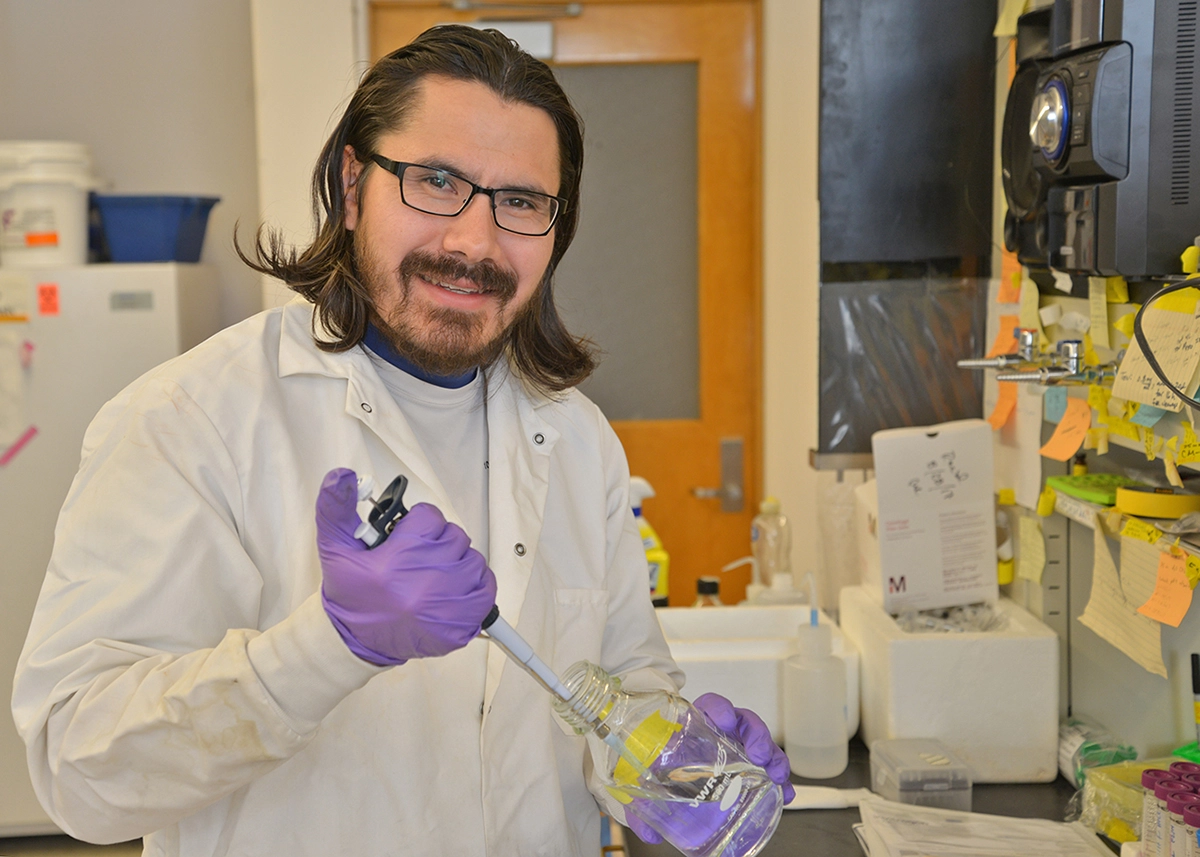 2. Tell us about your path to your current position and what you do in your current role.
"The path to my current position can be described by a lot of failure and some success. I applied to several graduate programs but only got into one program, and after one semester there I needed to return home for personal reasons. Back home I worked for 2 years as a Registered Sanitarian (doing inspections), and during this time I realized the lab was where I wanted to be, so I re-applied to graduate school. I decided to attend the University of Montana (UM) because I could be close to my family. I studied unfolded proteins for 6 years for my PhD degree, then did more applied protein research for my postdoctoral work for 3 years at Rocky Mountain Labs in Hamilton Montana. What I do in my current role is a lot of managerial duties, but I still get to be in the lab, which I enjoy. "
3. Tell us about the research or project that was supported by your SSMN grant, including your paper that was recently published in Acta Neuropathologica.
"The research project supported by the SSMN grant involved a protein called superoxide dismutase 1. Superoxide dismutase 1 protein changes shape in amyotrophic lateral sclerosis, and in the project supported by the SSMN grant, we aimed to detect this shape change using a novel method by applying it to several postmortem brain and spinal cord tissues from ALS patients, without or without known genetic mutations linked to ALS. In the Acta paper we observed most ALS patients had abnormal shape changes of superoxide dismutase 1 protein, which indicates it is in the pathology of ALS, and could be a marker for this disease."
4. How has receiving an SSMN grant impacted your career and/or research?
"It has impacted my career and research in a positive light, as it was the first grant I received about superoxide dismutase 1. It has been an important milestone for my lab to get this grant and publish our first paper on abnormal superoxide dismutase 1 in the pathology of amyotrophic lateral sclerosis using a new method, important steps for receiving more grants and publishing more papers in this area."
5. What advice would you share with current Sloan Scholars and fellow Sloan Scholar alumni interested in a similar career path?
"Have courage to get outside your comfort zone (in terms of learning new lab skills, exploring other areas of research, just learn something new and challenge yourself), always read the literature, always ask questions, be bold, always push your limits, and always make time to give to others. "