Scholar Spotlight: Dr. Brian Pimentel
About The Scholar: Dr. Brian Pimentel
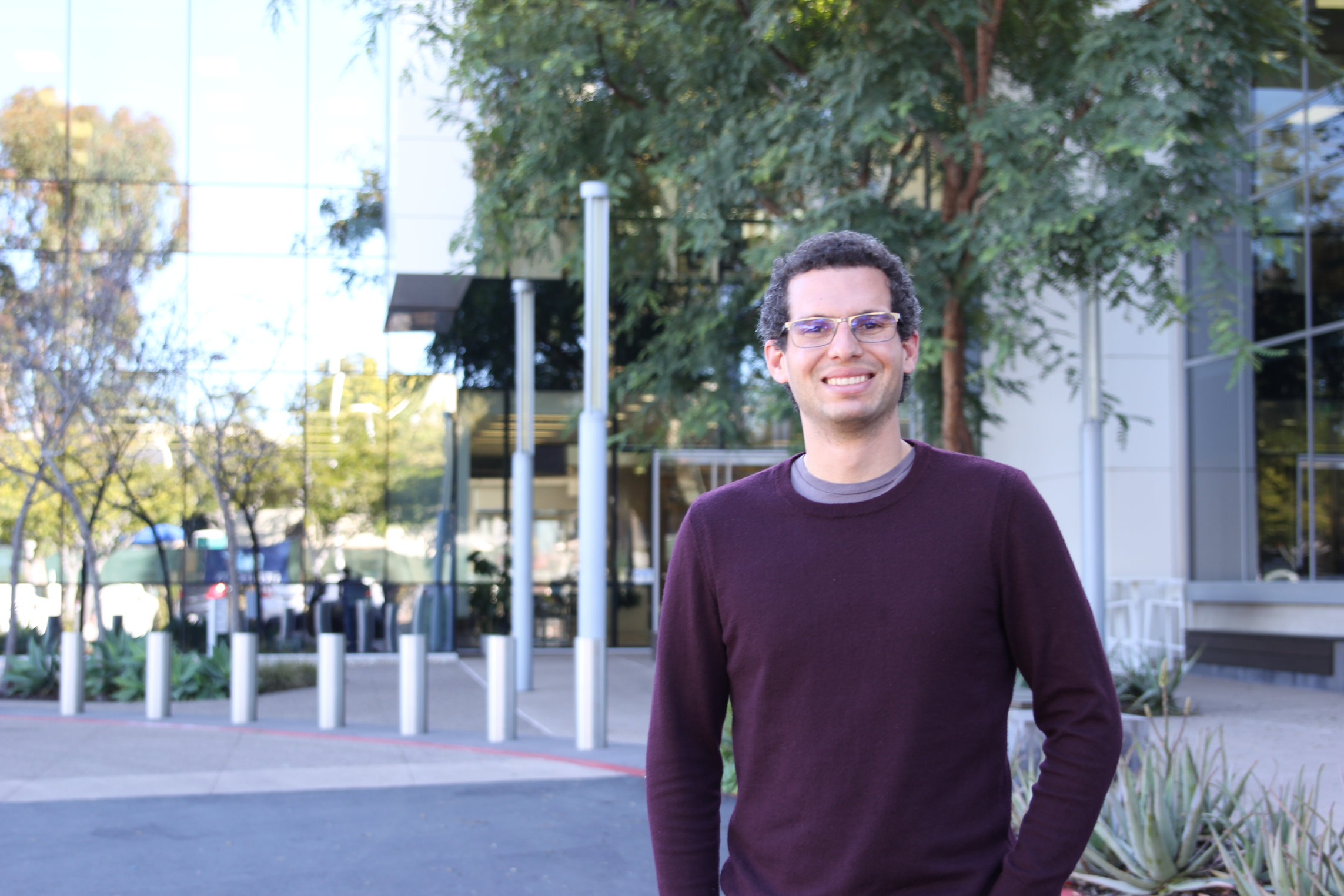
Dr. Brian Pimentel is a 2018 Sloan Scholar PhD in chemical and biomolecular engineering from Georgia Institute of Technology. 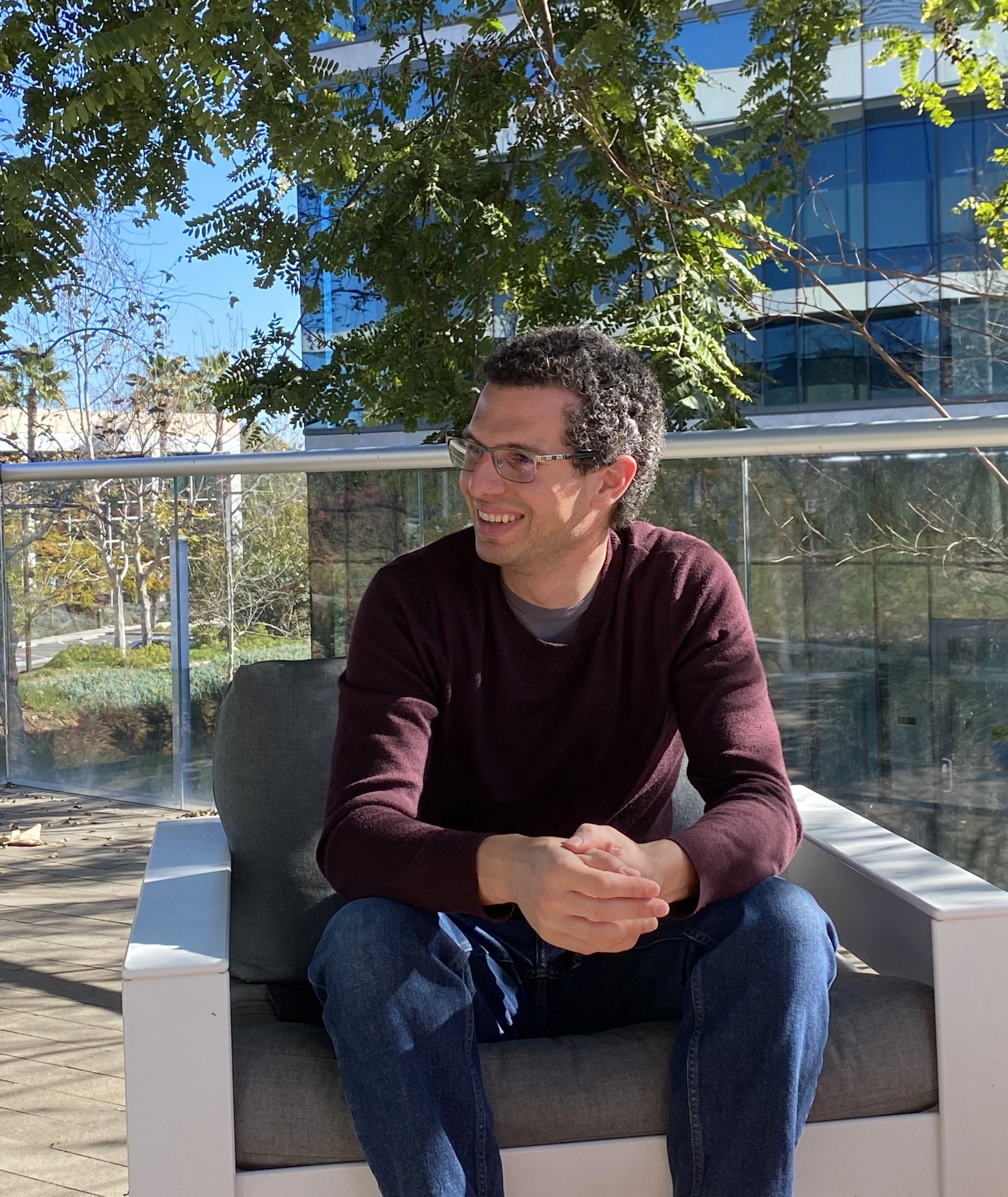 Brian grew up in the Dominican Republic and lives in San Diego where he works as a Process Development Engineer at Geno, Inc. Geno is a biotech startup advancing green solutions to sustainably produce commonly used materials for reduced negative environmental impacts (Geno). At Geno, Brian conducts laboratory scale testing to validate sustainable process design decisions.
Prior to this, Brian was a postdoctoral scholar with the Cohen Research Group at UCSD where he collaborated on the investigation of the capture and detection of chemical warfare agents using surface-modified nanoporous silicon sensors. He also worked as a Senior Scientist with Ionis Pharmaceuticals in their process research department to evaluate materials and techniques for the purification of oligonucleotide drug substances. He has received fellowships with the Goizueta, Sloan and National Science Foundation, and has a number of publications focused on adsorption and diffusion of gases in microporous materials. Brian enjoys the outdoors and is excited to become a new dad in 2023!
Academic Work & Experience
Brian graduated magna cum laude from the University of Notre Dame where he earned his Bachelor of Science in chemical and biomolecular engineering. He went on to earn his PhD in chemical and biomolecular engineering from the Georgia Institute of Technology (Sloan UCEM) where he worked as a founding member of the Lively Research Group. As a PhD student, Brian’s thesis centered around the use of Zeolitic Imizadolate Frameworks for the purification of light hydrocarbon mixtures using pressure swing adsorption in hollow fiber beds. His academic work in the development of new sustainable processes through energy-efficient purifications loosely aligns with the work he does in his professional career.
Brian initially wanted to attend medical school but had a cardiologist uncle who piqued his interest in engineering after insisting that the problems of the future would be solved by engineers! His uncles encouragement helped Brian start as an engineering major. As he took more classes, he found enjoyment in the math and chemistry combo that chemical engineering provided - and hasn’t looked back since!
Brian highlights technical and soft skills he learned as a graduate student that have helped in his current position and lab work. These skills include:
- Analysis & Critical Thinking
- Data Sharing & Presenting to Diverse Shareholders
- Decision Making
- Designing Experiments, Labs & Programs
- Engineering Fundamentals
Data science and formalized experiment design are areas Brian wishes to have strengthened through his graduate program. He emphasized how these methodologies, as well as time and funds, are important factors to consider in an industry company, especially when designing sustainable and efficient experiments (e.g., least amount of experiments to yield most results). This can differ from graduate school experiences where students have space and time to conduct more experiments to yield more detailed results.
Industry Career: Process Development Engineer at Geno, Inc.
As a graduate student, Brian felt the call to be more hands-on in his professional career and transition from fundamental to applied sciences for closer interaction with projects that could have a more immediate impact on society. He is fortunate to do just that in his current position as a Process Development Engineer at Geno, Inc. Geno is a biotech startup working to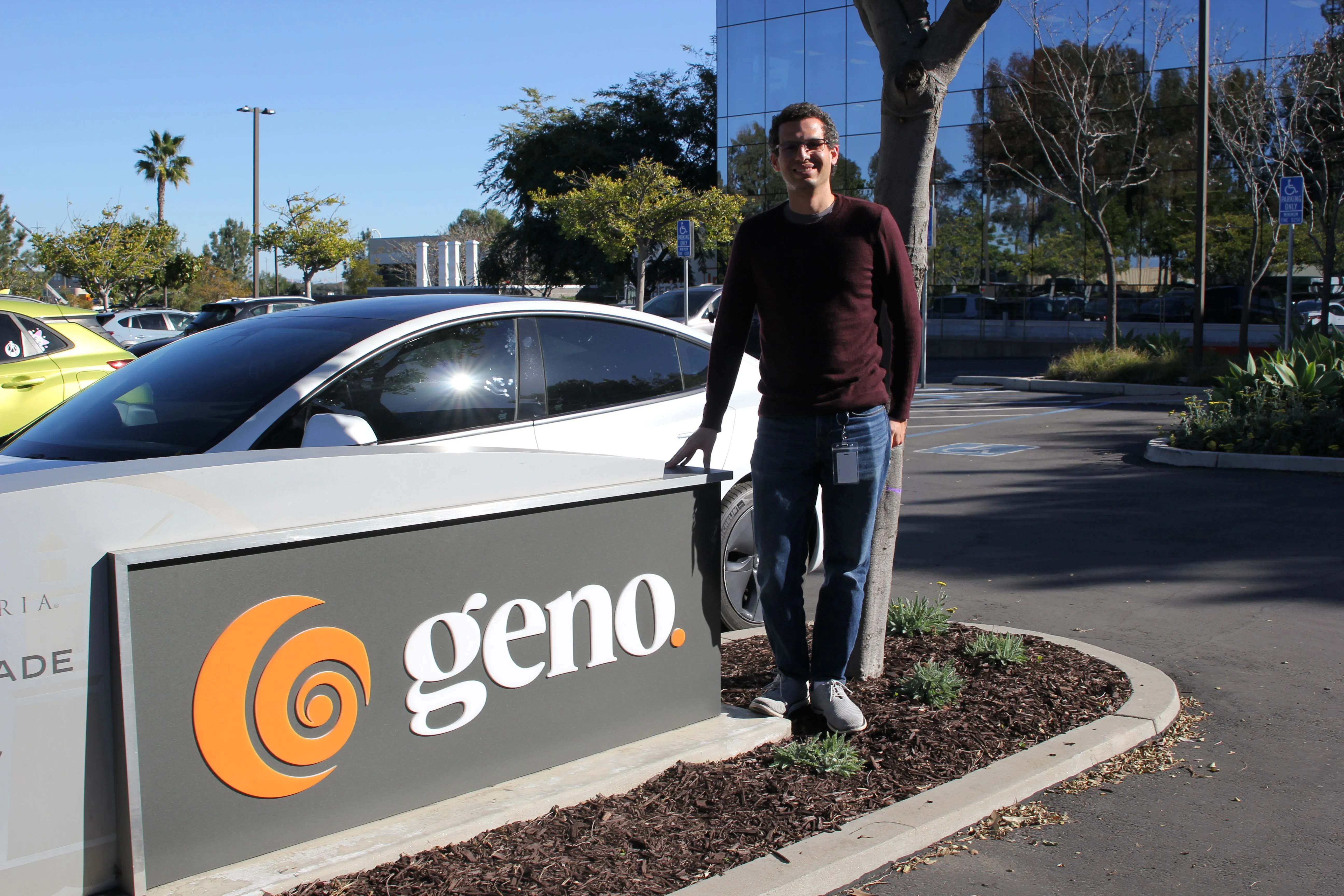 advance green solutions to sustainably produce commonly used materials (e.g., nylon, butylene glycol, etc.). Their solutions aim to replace unsustainable production methods and materials to reduce harmful impacts to the environment, while still providing people with the materials they need.
Brian spends the majority of his work week in the lab generating data to qualify sustainable process design steps and unit operations for commercial level scale. His position also entails data analysis and application of that data for new design decisions. He appreciates how the results generated matters and how everything has immediate feedback because of Geno’s mission in sustainability. Geno’s commitment to this is additionally reflected through their use of green supply chains and comprehensive assessments of their technologies' carbon emissions (Geno).
Mentorship & Role Models
Brian has worked and learned from many role models that have supported him through his professional journey. Brian’s graduate advisor, Ryan Lively, has been a key mentor who he’s had the chance to work the longest and closest with. He is grateful to his advisor for teaching him how to execute effective science, research, and technical presentations. Be sure to read Brian and Ryan's publication on Enabling Kinetic Light Hydrocarbon Separation via Crystal Size Engineering of ZIF-8.
Since graduate school, Brian notes how he has worked with many caring, kind, and intelligent supervisors and bosses. The positive support they have provided has given him the space to thrive in his work and career. Now with a career in industry, Brian continues to receive mentorship at a more individualized level that encourages him to continue doing his best work possible.
Advice for Sloan Scholars Pursuing an Industry Career
Brian shared a wealth of knowledge about pursuing careers and finding jobs in industry:
- Landing the first job is the hardest and it is not your fault if it takes a while: The process of finding a job in industry is very different than finding a postdoc or other academic position; but once you get your first job, you find that it is easier to network and learn about other positions.
- The process to landing your first job will be part preparation and part luck: Brian prepared himself by talking with collaborators, following up on interviews, and keeping his information available so that companies were able to find information about his qualifications and skills. With time and persistence, the right position with the right company had come along!
- Network and interview everywhere!: Brian found his current position after connecting with a contact he made after an unsuccessful informational interview years prior. Sometimes a “failed” interview can still lead to connections or a future job offer if a better fit for another position opens up in the future.
- Scout LinkedIn and keep your resume visible online!: Brian kept his resume/CV posted on LinkedIn. It helped him to be easier found by hiring companies and eventually lead to a job interview and offer!
Thank you to Brian for welcoming us to his workplace for this Featured Scholar Interview. Be sure to connect with Brian on LinkedIn and visit Geno’s website to learn more about their work!